
As the Trustees assess the next round of grant applications, we are delighted to provide an update on some of our other projects.
ECT_20250311A - The impact of the Yellow-legged hornet on colony development of honeybees (Apis mellifera) and the buff-tailed bumblebee (Bombus terrestris) via innovative monitoring technology
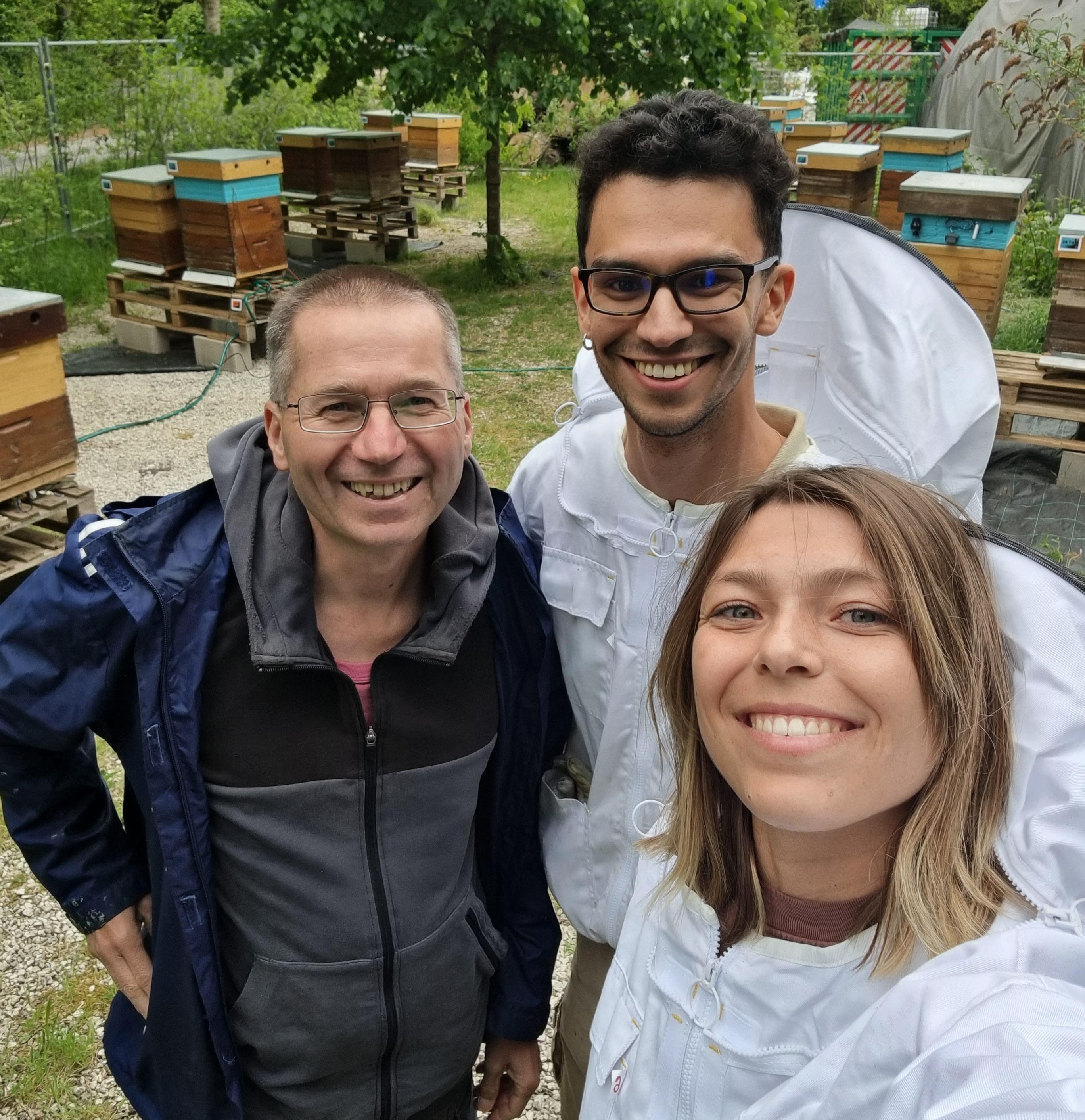
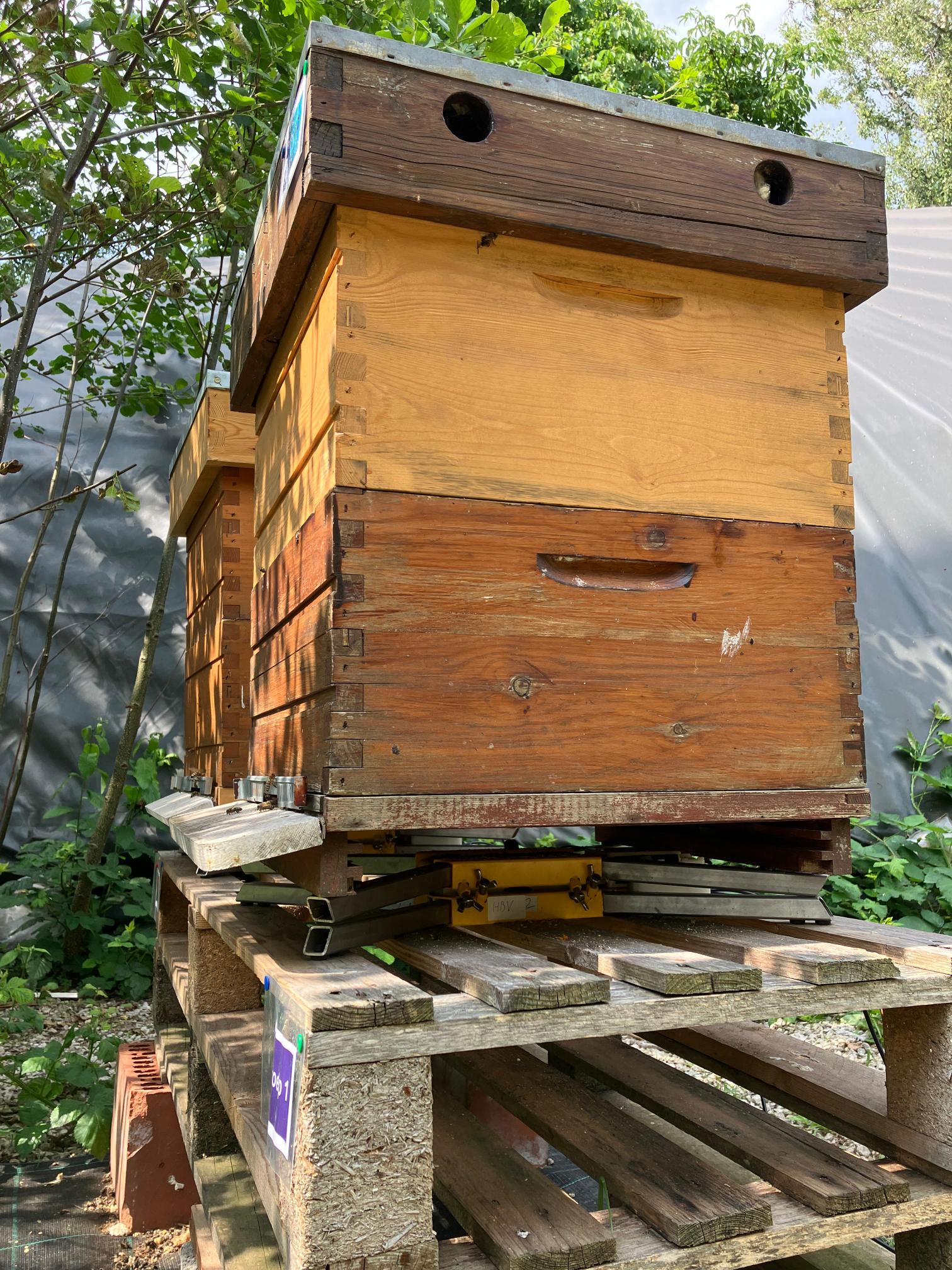
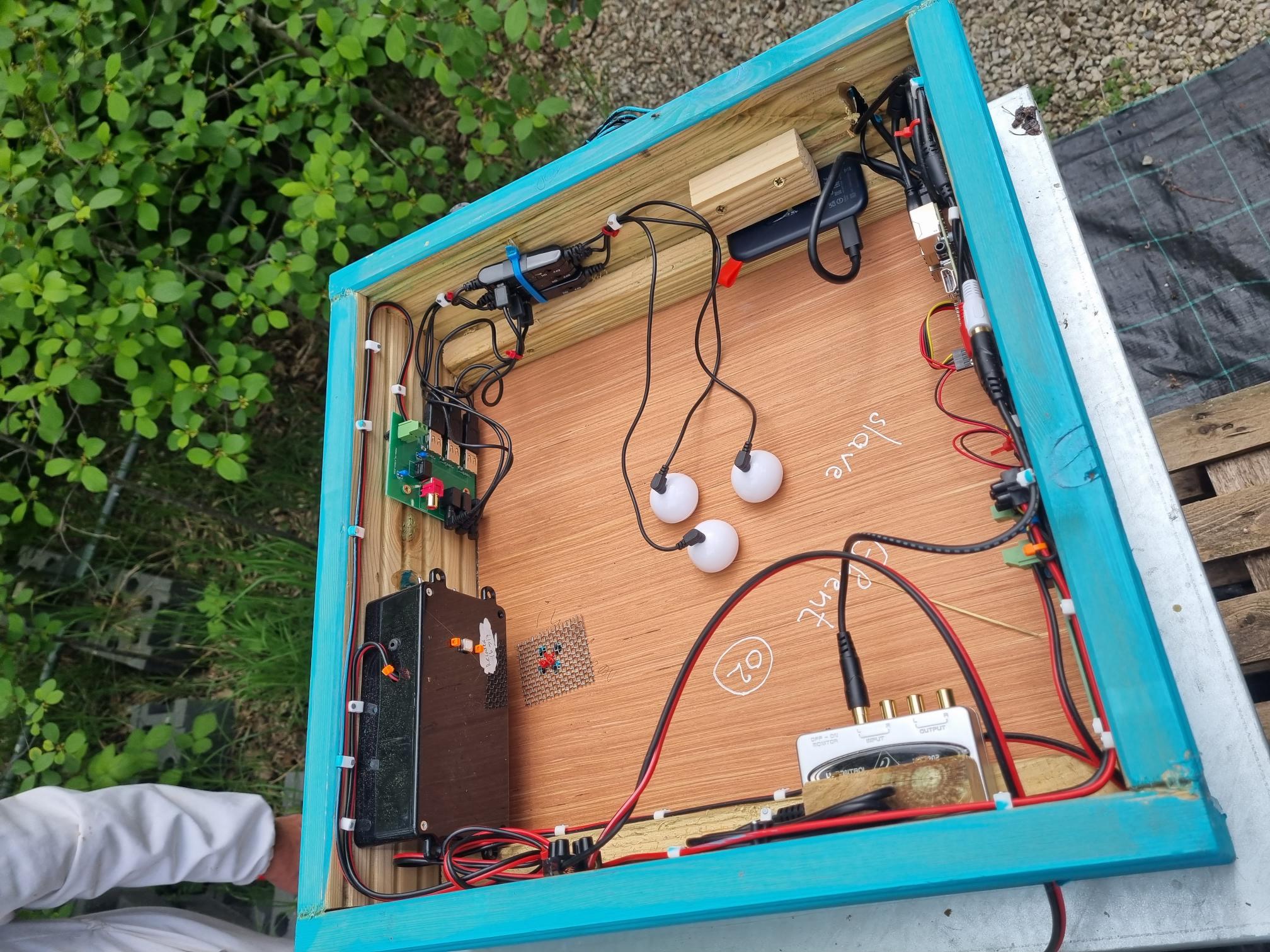
PhD students Heleen Van Ransbeeck and Kamiar Torabi at the university of Ghent, have successfully set up their experiments using BEEP systems and electromagnetic knockers funded by the Eva Crane Trust (see photo.). Kamiar is investigating how different beekeeping practices influence stress levels in honey bee colonies, while Heleen will focus on the impact of Asian hornet predation on stress levels in a honey bee colony
 |
|
 |
.
ECTA_20210904 - Ethnobiological study of the interactions between stingless bees, honey and Amazonian people in Peru
The latest academic article for research supported by the Eva Crane Trust has just been published in Palynology, (June 2025) doi.org/10.1080/01916122.2025.2497926. The Trust funded research by Rossana Paredes at Universidad Peruana Cayetano Heredia, which investigated the relationships between stingless bees, honey and Amazonian communities in Peru. Congratulation to Dr Paredes on this publication and for obtaining her PhD.
Remember there is a list, including links of all the publications on our website - ECT Funded Research articles https://www.evacranetrust.org/en/page/ect-funded-research-articles
One of the aims of the Trust is to ensure that research is shared. In the latest edition of Beekeepers Quarterly we were pleased to have the work of PhD student Anna Hadjitofi published. Anna, from the University of Edinburgh aimed to decode the waggle dance. Review her case study for yourselves: “The honeybee dance decoded: a model and a test of how bees share food locations”.


