

Urban areas have the potential to make a significant contribution to the conservation of biodiversity. For example, in the UK, we have about 22 million private gardens covering an area of more than 500,000 hectares. Interest in making gardens more wildlife friendly has burgeoned in recent years, and much advice is available as to how to do so, but most of it is based on anecdote rather than scientific evidence. The Buzz Club is attempting to fill this knowledge gap, putting the science into wildlife gardening.
To do so, we create citizen science experiments designed to test the effectiveness of different interventions. Data are then collected with the help of hundreds of volunteers across the UK, who we engage and educate in pollinator conservation and guide through how to conduct a simple experiment and collect useful data. In 2025, we had 1111 citizen scientists registering their interest to volunteering with us, with approximately 45% of these being for in ‘The Big Bee Hotel Experiment’.
UK bee research and conservation efforts are often focussed on the ‘flagship’ social bee species, the bumblebees and the honey bee, while far less attention is paid to solitary bees, despite the fact that they comprise the large majority of bee species (~250 of 275 species) and are known to be important contributors to pollination of crops and wildflowers.
One habitat that is often lacking in gardens is nesting sites for cavity-nesting solitary bees. We have many charismatic and exciting species of cavity nesting solitary bees in the UK such as the leafcutters, mason and resin bees. These bees need cavities to nest in which would naturally come from hollow stems of dead plants and insect tunnels in deadwood for example – habitats which are often scarce in our modern tidy world.
Bee hotels aim to provide an alternative environment for these solitary bees to nest in. They usually consist of hollow tubes, such as bamboo, or holes drilled into logs. A huge diversity of bee hotel designs are sold in garden centres, but which ones actually work? Thanks to TBBHE, we are now able to answer this question (though there is always more to learn).
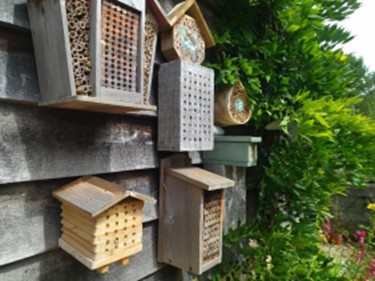
Figure 1: a selection of commercial and DIY bee hotels.
What we did
We recruited volunteers from across the UK by advertising the project to Buzz Club members and more widely on social media. When a participant signs up to TBBHE, they are asked to fill in a registration form detailing their bee hotel. They are asked for information on the size of their hotel, the materials it is made of, the number, diameter and depth of holes, location including aspect and height off the ground, proximity to pollinator friendly plants, whether they clean out the hotel or not, and so on.
In 2025, 419 bee hotels were registered for TBBHE by volunteers all over the UK (see map). Volunteers were asked to submit a photo of the front of their bee hotel each month from March to September. From this, we are able to quantify how many holes are filled each month. Different bee species use different material for the plug, so we are able to distinguish which species are in residence (though some species have to be pooled as they use the same materials, e.g. various leafcutter bees). We could then statistically model the data to discover which factors are most important in determining occupancy of hotels, and how bee species differ in their preferences.
Some of the more useful findings are as follows:
• In total, we now have data from 13964 nests (occupied holes)– 79% with mud (probably red mason bees, Osmia bicornis); 8% with leaves (leafcutter bees, Megachile sp.); 7.5% with leaf mastic (mainly blue mason bee, Osmia caerulescens); the other nests were capped with other materials such as cellophane (yellow-faced bees). Offering a range of hole sizes promotes bee diversity, with leafcutters using larger holes of diameter 9-12mm, mason bees using mainly 5-7mm holes, and a range of smaller species occupying holes of 3-5mm, including large-headed resin bee, Heriades truncorum, yellow-faced bees and mason wasps
• Hotel attached to tree trunks performed poorly compared to those attached to fences, sheds or walls. We suspect this is because earwigs often occupy hotels on trees.
• Height of the hotel, within the range 20-200cm, had no effect on occupancy.
• Hotels without shade, and facing east or south, were more likely to be occupied.
• Hotels situated near other hotels had slightly lower occupancy. This may reflect dilution or a build up of parasites.
• In terms of construction, cardboard tubes were significantly more attractive to bees who cap their nests with mud e.g. red mason bees, but not attractive to other species. Bamboo, a commonly used material for bee hotels, was only preferred by those who cap their nests with leaf mastic e.g. blue mason bee and orange vented mason bees, and those who cap their nests with ‘other’ materials e.g. yellow-faced bees and scissor bees. Surprisingly, bees showed no preference for deeper holes, despite high predation risk for offspring in shallow hotels.
• Overall, home-made hotels and commercial hotels performed equally well.
There is more to be learned from the data set, for example by examining preferences of the different bee species / groups.
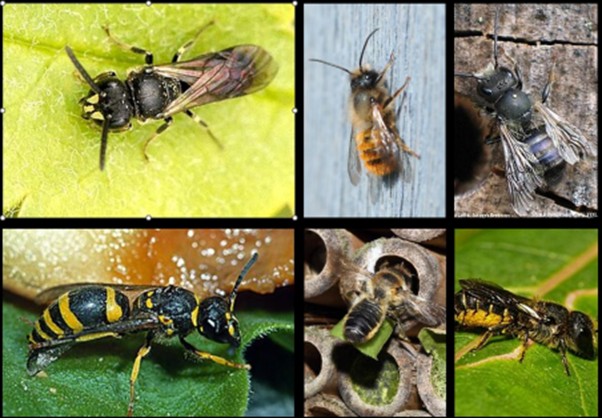
Figure 2: Some of the residents of bee hotels
Conclusions
Bee hotels, properly designed and situated, are occupied by a diversity of bee species, and also some wasps. Our project provides an evidence base to improve their design and inform their positioning in gardens. Aside from these benefits, we have engaged many hundreds of volunteers in learning more about solitary bees.
We would like to continue TBBHE, at least for another year, and hopefully beyond. There is much more that we would like to learn about optimum bee hotel design. In particular, we would like to examine the pros and cons of cleaning out the hotels, and investigate patterns of parasite build up over successive years in established hotels. This can only be achieved with a long-term data set gathered over multiple years. We would also like to investigate further the benefits of painting patterns on to the front of bee hotels, which may help female bees to identify their own nest entrance more accurately.
There is currently huge and growing enthusiasm for wildlife gardening, and in particular for supporting wild pollinator populations. Well designed bee hotels have a role to play in helping to support healthy, diverse pollinator populations in urban areas, and in fostering a general appreciation of insects. Our ultimate goal is to reach a point where every garden has a well-designed bee hotel ( or two), flowers for pollinators, and is managed in a wildlife-friendly way.
Funding
This project costs about £30k per year to run, comprised almost entirely of staff costs. The Eva Crane Trust kindly contributed £4.9k in 2025.
Project webpage: 
Banner and thumbnail image credit: ecoACTIVE
Dave Goulson & Isobel Sexton, University of Sussex.
Ref.: ECT_20241255B
Completed 2025