

I would like to express my sincere gratitude to the Eva Crane Trust for their generous support, which played a crucial role in enabling this research. Their funding supported essential components of the project, including extended fieldwork, laboratory time for sorting and identifying specimens, purchase of specialised equipment, and opportunities to share findings with the wider scientific community at conferences. With this support, I was able to generate novel data on the tropical montane bee communities of Malaysia, contributing valuable information to regional biodiversity assessments and highlighting the urgent need to protect pollinators in rapidly changing montane environments.
This report summarises the project’s rationale, methods, key findings, and broader impacts, and outlines how the work contributes to ongoing and future pollinator conservation research.
Introduction
Bees in Malaysia
Malaysia is home to around 286 known bee species, but this number is almost certainly an underestimate. Most of what we know about Malaysian bees comes from lowland forests and farmland, meaning high‑elevation habitats remain largely unexplored.
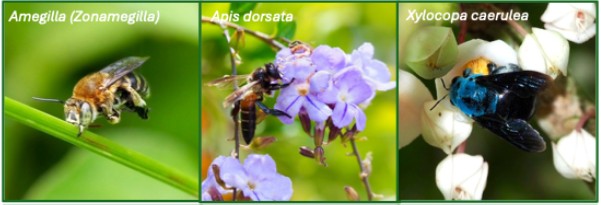
Figure 1: Examples of different bee species found in Malaysia. Photos taken by Zoe Bird.
Tropical Montane Forests
Tropical montane forests (TMFs) are high-elevation evergreen ecosystems, otherwise known as cloud or mossy forests. Tropical montane forests are highly biodiverse and ecologically important ecosystems. Characterised by cooler temperatures, persistent cloud cover, and steep elevational gradients, these forests support high levels of endemism and specialised species (Peh et al., 2011).
Nevertheless, TMFs in Southeast Asia, particularly those in Malaysia, are severely threatened due to agricultural expansion and urbanisation (Bubb et al., 2004). This means that these specialised montane forest habitats are being degraded, threatening many montane endemics with extinction (Brooks et al., 1999). In Peninsular Malaysia, 23% of the original TMF has been degraded, and just 9% of the remaining TMF is protected (Peh et al., 2011).
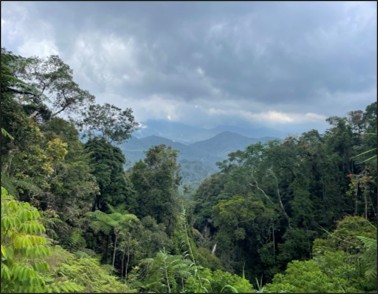
Figure 2: Montane forest in Fraser’s Hill
Bees in TMF landscapes
Because tropical montane forests are so steep, remote, and difficult to reach, scientists have rarely been able to study the bees that live there. This means we currently know very little about montane bee species or how they are coping with rapid changes in the environment. Yet these bees are important pollinators for many wild crops plants, making them essential for healthy ecosystems and local livelihoods.
Threats to Montane Bees
Montane bees face several pressures:
- Land‑use change - Forests are cleared for vegetable farms, tea plantations, and development, removing nesting sites and reducing floral resources (Garibaldi et al., 2011).
- Pesticides - Commonly used in agricultural areas, pesticides can harm bees directly by impairing their nervous system and reducing their ability to navigate, forage, and return to the nest.
- Urbanisation — Roads, tourism facilities, and housing fragment habitats and make it harder for bees to move between forest patches.
- Climate change — Rising temperatures push species upslope into smaller and smaller areas, while changes in rainfall and cloud cover disrupt flowering patterns.
Different bee species respond differently to these pressures. Some rely heavily on intact forest, while others prefer open or disturbed habitats. This range of habitat preferences can be a result of species traits such as size, nesting types, dietary preferences and sociality (Gutiérrez‑Chacón et al., 2018). These traits vary widely across the bee community (Mathiasson and Rehan, 2020), meaning that environmental pressures do not affect all species equally.
Importance of research
Understanding the current and future state of TMFs is essential for mitigating montane bee species loss (Soh et al., 2019). We risk losing specialised montane bee species to land‑use change before we even understand their role in the environment or how best to protect them.
Project Objectives
- This project aimed to better understand the responses of TMF bees to habitat degradation.
- Enhance understanding of the current abundance, distribution, and ecological traits of regional bee species.
- Inform future conservation for native bee communities in TMF and agricultural landscapes across South-East Asia.
Methods
Study locations
The Cameron Highlands, Pahang, Peninsular Malaysia, represent one of Malaysia’s most prominent montane regions, known for their cool climate, tea plantations, vegetable farms, and tourism. Cameron Highlands, in particular, is also an important regional ‘food basket ’, provisioning many surrounding countries (Barrow et al., 2009). This agricultural landscape is characterised by smallholder (less than 2ha) farms growing temperate crops such as strawberries, flowers and other vegetables (Barrow et al., 2009, Barrow et al., 2010, Chan, 2006, Rahim et al., 2016), and is now the second largest producer of vegetables in Malaysia (Farina et al., 2018, Mazlan and Mumford, 2005). However, rapid farming expansion, forest clearing, and new infrastructure have put increasing pressure on the area’s natural habitats - including its bee communities.
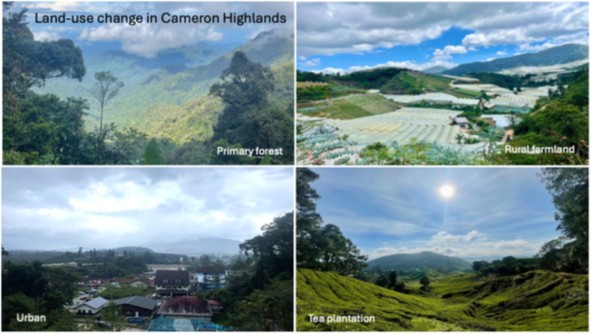
Figure 3: Examples of different land-use types in Cameron Highlands.
In contrast, Fraser’s Hill is a protected forest reserve and remains largely unaffected by human disturbance (Er et al., 2013). The area has minimal agricultural development and strict conservation regulations that limit land‑use change. Its well‑preserved habitats provide an ideal baseline for studying natural bee community structure and for comparing how pollinator assemblages differ between disturbed and undisturbed TMF landscapes.
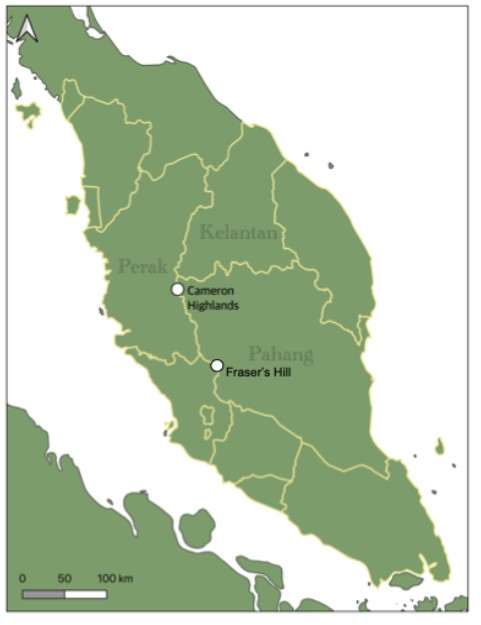
Figure 4: Map of Peninsular Malaysia, highlighting our study sites Cameron Highlands and Frasers Hill.
Sampling Methods
Sampling took place during February–April in both 2024 and 2025 across 16 sites: 12 in the Cameron Highlands and 4 in Fraser’s Hill. Fraser’s Hill has far less accessible land, so fewer sites could be established there. The sites represented a mix of primary forest, secondary forest, tea plantations, rural areas, and urban habitats.
At each site, five sampling points were chosen, spaced at least 100m apart. These points were selected based on features likely to attract bees - patches of flowers, flowering trees, or possible nesting sites.
Bee sampling used several complementary methods to capture as many species as possible:
- Malaise traps for passive insect collection
- Pan traps in multiple colours to attract different species
- Vane traps to target bees flying higher up
- Opportunistic hand‑netting when bees were observed nearby
This range of trapping methods to maximise the number of species captured. All sampling followed consistent protocols to allow meaningful comparisons across sites.
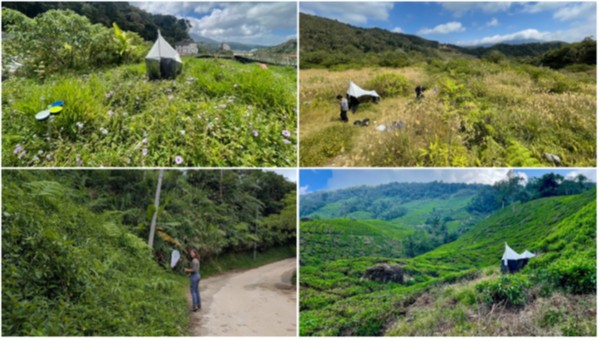
Figure 5: Images showing the range of field methods used to collect bees, including trap deployment and hand‑netting at selected sampling points.
At each site, environmental variables were also recorded. These variables included
- Temperature and elevation
- Floral abundance and diversity
- Canopy cover and vegetation structure
- Land‑use classification
Bayesian multi-species occupancy modelling was applied to quantify bee occupancies and detection probabilities across the disturbance gradient (Dorazio and Royle, 2005). In montane systems, bees can be present but go undetected due to environmental variability. These models can account for this imperfect detection.
Identification and Analysis
All specimens were sorted and pinned, and photographs were taken of each specimen as a record. The specimens were identified by John Ascher, an expert bee taxonomist for bees in this region. Now all specimens are stored in the Forest Research Institute Malaysia (FRIM).
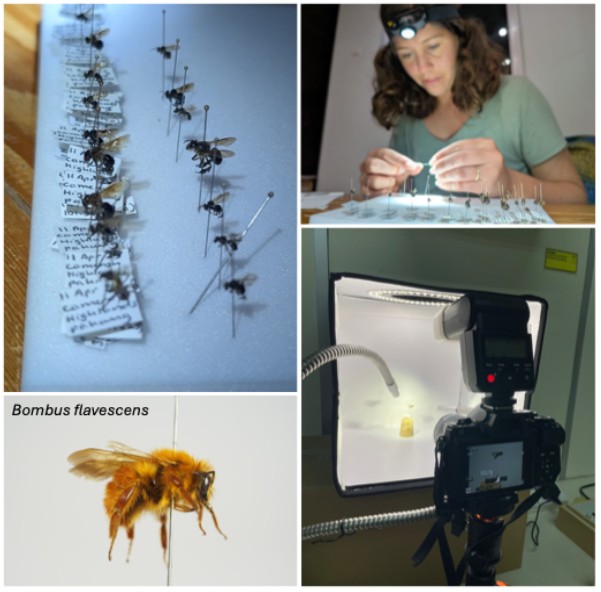
Figure 6: Process of sorting, pinning and photographing specimens in the field and in the lab.
Preliminary results
Bee Diversity Patterns
Bee diversity varied widely across the different habitats we sampled. In total, we collected 346 bee specimens representing 39 species, with another 11 species found during wider surveys. Almost half of the species recorded had never been documented for this region before, showing just how little is known about Malaysia’s montane bees. The highest number of species was found in a restoration area where former farmland had been cleared and allowed to regrow near intact forest, followed by forest edges. Dense forest interiors had the fewest species, as these shaded environments offer fewer flowers.
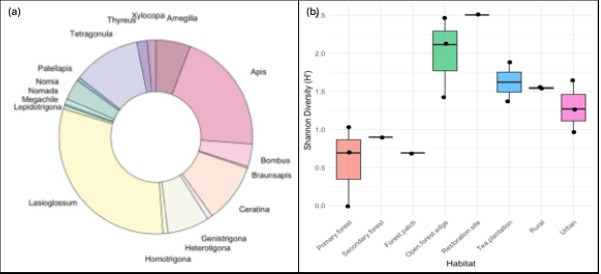
Figure 7 : (a) Proportion of each bee genus sampled during the study. (b) Variation in Shannon diversity index across habitats.
Importantly, several rare montane specialists were recorded, including Bombus flavescens, Amegilla hanitschi, and Elaphropoda impatiens, providing valuable new information on species that are seldom observed and poorly represented in biodiversity datasets. Furthermore, despite small number of specimens, we can tell an essential story about the understudied species and the lack of bees detected across the landscape.
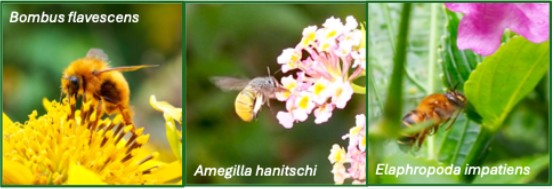
Figure 8: Photos of Bombus flavescens, Amegilla hanitschi, and Elaphropoda impatiens taken in the field by Zoe Bird.
Environmental Drivers of Community Structure
Floral Variables
- Occupancy decreased as floral diversity increased, as high‑diversity farmland habitats also experience high pesticide use, reducing specialist occupancy.
- Floral cover/abundance had weak effects, suggesting that ground flowers alone are not the main driver of occupancy.
Landscape & Habitat Variables
- Forest cover within 200m increased occupancy of bees, while urban cover within 50m strongly reduced bee occupancy.
- Distance from forest edge produced mixed trends:
- Montane specialists: occupancy declined with distance from forest.
- Generalists: occupancy increased with distance from forest.
Climate & Structural Variables
- Elevation and temperature also showed contrasting responses:
- Montane specialists: higher, cooler sites.
- Generalists & stingless bees: lower, warmer sites.
- Canopy cover had negative effects, demonstrating that bees prefer to forage in open areas where there are likely more flowers.
Key Findings
- Forest cover and edge connectivity are key for maintaining specialist bee populations.
- Clear distinction between montane specialists and elevational generalists.
- Reducing pesticide use and improving floral resource quality could enhance bee communities in farmland.
Outcomes and Impact
Scientific Impact
The project produced the first comprehensive dataset on montane bee communities in Malaysia, improving understanding of how environmental change shapes pollinator diversity. These findings provide a foundation for future ecological modelling, long‑term monitoring, and conservation planning. All collected specimens were deposited at FRIM, strengthening national biodiversity collections. We have also tested a range of sampling methods not previously tested in these forest habitats, which will provide valuable information on working sampling methods for future researchers.
Conservation Impact
The results identify habitats and species most at risk from land-use change, offering evidence-based guidance for land management in the Cameron Highlands. Recognising vulnerable functional groups supports more targeted and effective conservation strategies.
Public Engagement and Capacity Building
Local community members participated as field assistants, gaining practical field experience and knowledge of local bee fauna. Their contributions were acknowledged through authorship in resulting publications. The research has also been shared at multiple scientific conferences, helping to broaden awareness of montane pollinator conservation.
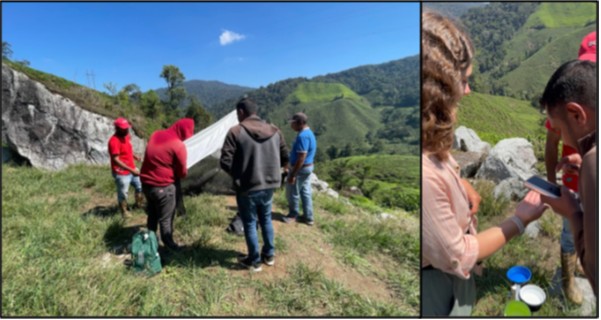
Figure 9: Group of local farmers helping set up sampling site and asking questions about bees.
Lessons Learned
Through this project, I have gained extensive experience with new sampling techniques, including trap deployment, bee pinning, and species identification, strengthening both my field and laboratory skills. I also developed confidence in leading a team in challenging montane environments, coordinating logistics, and ensuring consistent data collection. The work required resilience and motivation, especially under difficult field conditions. These skills will be invaluable in my future research career, enabling me to manage complex ecological projects, supervise field teams, and contribute high‑quality data to conservation and biodiversity initiatives.
Linked Research Completed During the Project
This project formed a central component of my PhD thesis, with all chapters intended for publication in high‑impact journals. Other parallel projects and extensions to this work can be seen below.
- Unidentified specimens - Several bee specimens collected during this study remain unidentified, suggesting potential new species for future taxonomic work.
- Wasp dataset - Wasps collected alongside bees provide a parallel dataset for applying the same modelling approaches.
- Climate and habitat suitability modelling - Additional modelling examined current and future habitat suitability for bees across Peninsular Malaysia.
- Farmer perception study - A social‑science chapter explored farmers’ perceptions of bees and their willingness to engage in conservation, revealing generally positive attitudes and reported declines in bee abundance.
Future work needed for Cameron Highlands and Fraser’s Hill
- Pesticide impact research - Further studies in the Cameron Highlands are needed to understand how pesticide use affects montane bee communities.
- Sustainable farming partnerships - Continued collaboration with farmers will be essential for developing bee‑friendly agricultural practices.
- Long-term monitoring - The dataset provides a foundation for long-term monitoring of montane pollinators and can be expanded to other Malaysian montane regions.
- Regional conservation impact - Findings can inform conservation planning across montane systems throughout Southeast Asia.
Conclusion and Acknowledgements
This project has significantly advanced the understanding of how environmental change affects tropical montane bees in Malaysia. The findings highlight both the vulnerability and resilience of different bee groups and emphasise the importance of conserving montane habitats in the face of rapid environmental change.
I am deeply grateful to the Eva Crane Trust for their generous support, which made this research possible. The outcomes of this project will continue to inform research, conservation, and ecological understanding for years to come.
Zoe Bird
University of Southampton, UK
Ref.: ECT_20241206A
Completed 2026
References:
BARROW, C., CHAN, N. & MASRON, T. B. 2010. Farming and other stakeholders in a tropical highland: Towards less environmentaly damaging and more sustainable practices. Journal of Sustainable Agriculture, 34, 365-388.
BARROW, C., CLIFTON, J., CHAN, N. & TAN, Y. 2005. Sustainable development in the Cameron highlands, Malaysia. Malaysian Journal of Environmental Management, 6, 41-57.
BARROW, C., NGAI WENG, C. & MASRON, T. 2009. Issues and challenges of sustainable agriculture in the Cameron Highlands. Malaysian Journal of Environmental Management, 10, 89-114.
BROOKS, T. M., PIMM, S. L., KAPOS, V. & RAVILIOUS, C. 1999. Threat from deforestation to montane and lowland birds and mammals in insular South‐east Asia. Journal of Animal Ecology, 68, 1061-1078.
BUBB, P., MAY, I. A., MILES, L. & SAYER, J. 2004. Cloud forest agenda.
CHAN, N. 2006. Cameron Highlands: issues and challenges in sustainable development.
ER, A., CHONG, S. T., AHMAD, H., MD SUM, S. & RAMLI, Z. 2013. The Sustainability of Fraser’s Hill as an Eco-destination. International Journal of Business Tourism and Applied Sciences, 1, 109-115.
FARINA, Y., MUNAWAR, N., ABDULLAH, M. P., YAQOOB, M. & NABI, A. 2018. Fate, distribution, and bioconcentration of pesticides impact on the organic farms of Cameron Highlands, Malaysia. Environmental Monitoring and Assessment, 190, 386.
MAZLAN, N. & MUMFORD, J. 2005. Insecticide use in cabbage pest management in the Cameron Highlands, Malaysia. Crop Protection, 24, 31-39.
PEH, K. S.-H., SOH, M. C., SODHI, N. S., LAURANCE, W. F., ONG, D. J. & CLEMENTS, R. 2011. Up in the clouds: is sustainable use of tropical montane cloud forests possible in Malaysia? Bioscience, 61, 27-38.
RAHIM, H., WAHAB, M., AMIN, M. Z. M., HARUN, A. & HAIMID, M. T. 2016. Economic values of conservation attribute options in Cameron Highlands. Economic and Technology Management Review, 11, 123-133.
SOH, M. C., MITCHELL, N. J., RIDLEY, A. R., BUTLER, C. W., PUAN, C. L. & PEH, K. S.-H. 2019. Impacts of habitat degradation on tropical montane biodiversity and ecosystem services: a systematic map for identifying future research priorities. Frontiers in Forests and Global Change, 2, 83.