

Banner Image: Dr M Monasterolo - Sieras de Ambato Capayán
Why the project was necessary
Stingless bees (tribe Meliponini) are the most diverse group of eusocial bees. They provide many economic benefits, including crop pollination and production of honey, pollen and wax for medicinal and food uses. These bees are some of the main pollinators of wild and cultivated plants (Kevan & Imperatriz-Fonseca, 2002; Meléndez Ramírez et al., 2013). Despite their ecological importance and socio-economic potential, the diversity of stingless bees, and the roles that floral resources and landscape composition play in shaping their distribution, remain poorly understood in most regions of the world (Bueno et al., 2023).
There is limited knowledge of these species, while inadequate hive management and threats such as landscape fragmentation and the decline of natural resources also pose important challenges. Together, these factors make it difficult to balance the conservation of native forest with the conservation of local biodiversity. Published studies assessing the impact of land-use change and habitat fragmentation on stingless bee diversity have produced contradictory results (Meléndez Ramírez et al., 2013; Chévez et al., 2023). Despite this, it is reasonable to expect that native bee communities are being negatively affected by human disturbance and habitat fragmentation. In Argentina, and particularly in Catamarca Province, this issue is further compounded by the degradation of native habitats, limited scientific research, low public awareness, inadequate infrastructure and insufficient support from public policy.
Aims and objectives
The aim of this project was to enhance our knowledge of stingless bees in Catamarca, Argentina, and to explore the relationship between their presence and abundance, native forest cover and other landscape features. Our specific objectives were:
- To generate baseline knowledge about the diversity of stingless bees in protected natural areas and surrounding family farms
- To assess the influence of floral diversity and landscape features on stingless bee abundance.
Methodology
The study was conducted in Capayán, Catamarca Province, in northwestern Argentina (28° 37′ 31″ S, 66° 05′ 37″ W). The region includes a wide variety of environments, ranging from arid areas with wide geological and altitudinal diversity (the Monte ecoregion), the most extensive dry forest in South America (the Chaco), and the southernmost edge of the Yungas cloud forest (Morrone, 2014; Demaio et al., 2022). The landscape is dominated by old-growth forests, mainly within protected natural areas, as well as secondary semi-deciduous forests, and shrublands. These habitats alternate with patches of fodder crops, fruit trees (predominantly citrus and olives), and rural areas that include family farms.
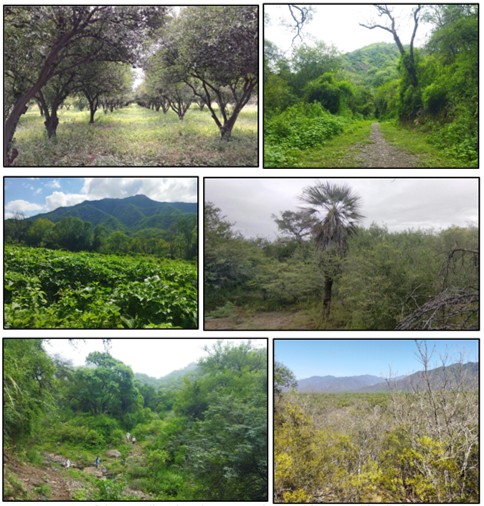
Figure 1. Some of the sampling sites, in protected natural forest and family farms.
We conducted a survey to assess the diversity of stingless bees and their floral preferences in 41 sites across Catamarca, Argentina. Our study included protected and well-conserved areas of native forest, as well as surrounding family farms. We assessed the influence of flowering plant diversity, altitude of each site (400 – 1450m a.s.l.), and landscape features (native forest cover and forest edge density within 400m radius from the centre of each site) on the diversity of stingless bees. We conducted three types of sampling (Fig. 2):
- Pan traps: We established four pan-trap stations at each site, using traps of different colours placed in trees.
- Transects: We conducted three 10-minute line transects at each site to record the richness and abundance of stingless bees and flowering plants, as well as bee–plant interactions.
- Nest searches: We searched for stingless bee nests in trees and other structures, using interviews and conversations with local residents to help locate nests and to gather information on local knowledge of these bees.
We subsequently identified specimens of stingless bees in the laboratory. Finally, we conducted four workshops at educational institutions in the study region to share information and results about stingless bees, pollination, and the importance of native ecosystems (Fig. 2). These workshops focused on the role of pollinators in native forests and agricultural systems, with particular attention to stingless bees, and their diversity, biology and potential for management.
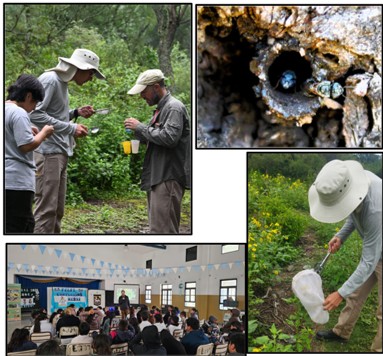
Figure 2. Different sampling methods used to record the diversity of stingless bees
(pan traps, nest searching, and line transects), and workshops at educational institutions.
Outcomes
We identified two stingless bee species, Plebeia molesta and Geotrigona argentina. We recorded 21 interactions between these two species and 10 species of flowering plants, in both protected natural forest and the surrounding family farms (Fig. 3). Most of these plants are native to the region. These observations demonstrate that native bees are actively visiting a range of native flowers in the study area. With the help of local residents, we identified nests, mainly of P. molesta, in older trees and columnar Cactaceae species. Also, we found nests in walls and other human structures (Fig. 4).
We found no evidence of stingless bee hives currently being managed. However, several residents have stated that keeping bees and utilising their honey, wax and geopropolis was more prevalent in the past, and they believe these practices have gradually declined across generations.
We expected to find Plebeia catamarcensis during the study but did not record it. However, we do have records of nests approximately 10 km from our nearest study site. This species has been observed to occur in areas with higher population density and urban development than our study area. Therefore, its presence in the area studied is a possibility, particularly if the sampling effort is increased. It is also worth noting that P. catamarcensis can be difficult to distinguish from P. molesta in the field, particularly when individuals are in flight.
P. molesta was the only species with potential for management for the extraction of honey, pollen and geopropolis. This species has been cited in connection with the incipient development of meliponiculture as a productive activity in other regions of Argentina. Studies conducted in nearby regions have provided information on the safety of P. molesta honey for human consumption, as well as relevant data on its physico-chemical composition (Geisa et al., 2024).
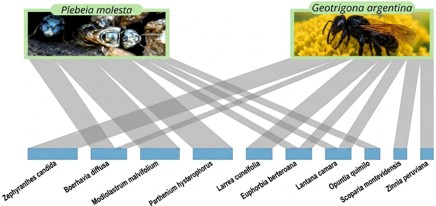
Figure 3. Interactions between flowering plants (bottom) and the two stingless bee species (top).
The width of the grey lines indicates the number of visits to each flower.
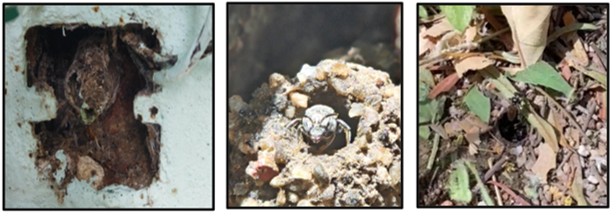
Figure 4. Nests of P. molesta (left and centre) and G. argentina (right) found in the study area.
The abundance of stingless bees increased in areas with a higher percentage of natural habitat within a 400m radius, including protected natural areas and surrounding family farms (Fig. 5). In contrast, stingless bee abundance was not affected by the richness and abundance of flowers, altitude or edge density.
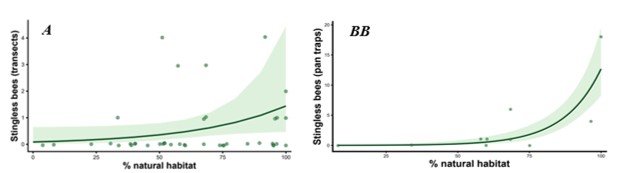
Figure 5. Abundance of stingless bees along transects (A) and in pan traps (B) in relation to the percentage of natural habitat.
Conclusion
Our study showed that both species were found not only in protected natural areas but also around family farms and in relatively urbanised environments. This demonstrates their ability to use different habitats, while also emphasising the importance of maintaining natural vegetation within these landscapes.
These results suggest that the amount of remaining natural habitat surrounding farms and protected areas can play an important role in the conservation of stingless bee populations in the region. Therefore, there is a need to implement habitat management strategies and to ensure the protection of natural forest areas. Although these bees appear to be relatively well adapted to urbanisation, the conservation of stingless bees still requires the maintenance of native forest, given the effects of distance between fragments and overall landscape isolation (Meléndez Ramírez et al., 2013). However, further investigation is required to understand the habitat requirements of these bees in Catamarca.
How we benefited from Eva Crane Trust funding
We are very grateful to the Eva Crane Trust for supporting this project. Beyond the data generated, the funding facilitated the establishment and consolidation of relationships with local communities and institutions, as well as the dissemination of knowledge about stingless bees and pollination to educational institutions and the general public. The ECT funding also enabled us to contribute to the development of local scientific expertise, and to provide early-career researchers with hands-on experience in bee ecology. We would like to express our sincere gratitude to the Trust for its continued commitment to supporting research on bees, and for helping to facilitate this type of work in regions where information on native bee diversity remains limited.
The experience and results obtained through this project provide a strong foundation for continuing research on stingless bees and other wild bees in Catamarca, while also contributing to the conservation of native forests and the communities that depend on these ecosystems.
Dr. Marcos Monasterolo,
Centro Regional de Energía y Ambiente para el Desarrollo Sustentable (CREAS) CONICET-UNCA, Argentina
Ref.: ECT_202506505A
Completed 2026
References
Bueno, F. G. B., Kendall, L., Alves, D. A., Tamara, M. L., Heard, T., Latty, T., & Gloag, R. (2023). Stingless bee floral visitation in the global tropics and subtropics. Global Ecology and Conservation, 43, e02454.
Chévez, E., Porter-Bolland, L., García-Frapolli, E., Landgrave, R., & Revollo-Fernández, D. (2023). Bee–landscape relations in changing contexts: Implications for stingless bee management. Regional Environmental Change, 23(3), 106.
Demaio, P. H., Franchino, G. R., Palanca, E. I., & Arellano, O. A. (2022). Contribución al conocimiento de la flora vascular de alta montaña de la Sierra de Ambato (Catamarca, Argentina). Boletín de la Sociedad Argentina de Botánica, 57(2), 41–50.
Geisa, M. G., Flores, F. F., Müller, P. F., & Hilgert, N. I. (2024). Development of meliponiculture in Argentina, ethnobiology, and melissopalynology as tools for progress. In Nature(s) in construction: Ethnobiology in the confluence of actors, territories and disciplines (pp. 273–287). Springer Nature Switzerland.
Kevan PG, Imperatriz-Fonseca VL. eds. 2002. Pollinating Bees. The Conservation link Between Agriculture and Nature. Ministry of Environment; Brasília, Brazil. 313 pp.
Meléndez Ramírez, V., Meneses Calvillo, L. & Kevan, P. G. (2013). Effects of human disturbance and habitat fragmentation on stingless bees. In P. Vit, S. Roubik, & M. L. Pedro (Eds.), Pot-honey: A legacy of stingless bees (pp. 269–282). Springer.
Morrone, J. J. (2014). Biogeographical regionalisation of the Neotropical region. Zootaxa, 3782(1), 1–110.