

Introduction: Aims and Objectives
Wherever humans and honeybees live together, they form intense and meaningful relationships. Originally native to Asia, Africa, and Europe, honeybees now live almost all over the world. Honey is at the heart of this relationship. However, other bee products and services such as wax, pollen, and pollination also play a role. The interactions between humans and bees have changed significantly over the millennia of their coexistence. They differ geographically and culturally. I am primarily interested in the physical, sensory, and emotional interactions between humans and bees. These occur mostly (but not exclusively) in the context of beekeeping. Against this background, I describe how bees and humans influence and shape each other in beekeeping practice, which I have examined in Germany, Cameroon, and Japan. The comparative approach enables new insights into changing beekeeping practices and the human–honeybee relationship more generally. To make these intimate relationships more tangible and to contextualize them, I bring together written text and audiovisual outputs from my research. This is an experiment in multimodal anthropology.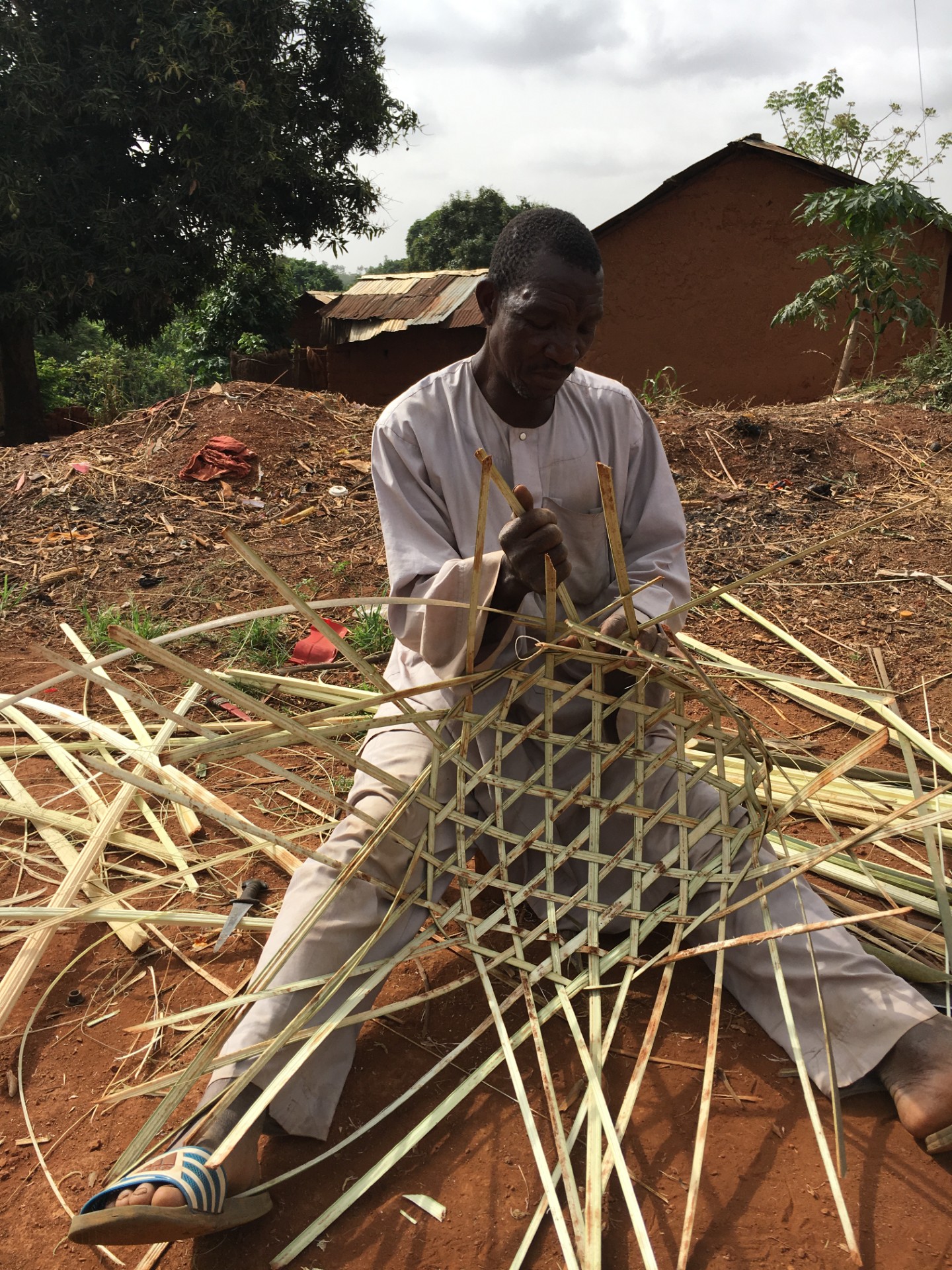
Ethnographic Research in Central Cameroon
The Eva Crane Trust funded my ethnographic research in Cameroon from 2016 to 2024. Throughout the project, I worked closely with bee biologist Mazi Sanda of the University of Ngaoundéré. In the spirit of transdisciplinary research, we coordinated our work with the interests and needs of our research participants, namely local beekeepers. At their request, we addressed applied topics such as the improvement of beekeeping practices and the honey trade.
In the spirit of “multi-sited ethnography” (Marcus 1995), we followed bees, honey, people, and associated discourses throughout Cameroon. The starting points for our work were the Central Cameroonian city of Ngaoundéré and the village of Dang, located about ten kilometers to the north, along with its surrounding villages and hamlets where honey was produced. Later, we expanded our research to the Cameroonian capital Yaoundé, where we worked closely with honey traders. After a period of absence due to the COVID-19 pandemic, I traveled to Ngaoundéré again in 2023 to complete the research and clarify open questions.
Thematically, after exploratory research on honey hunting and traditional beekeeping, we focused on honey hunting with the greater honeyguide bird (Indicator indicator) and the underlying multispecies relationships between humans, wild birds, and honeybees (Gruber 2018). This allowed us to gain valuable ethnographic insights into the sensory dimensions of beekeeping and honey hunting. We produced three short ethnographic films about honey hunting from ground nests (Gruber and Sanda 2017a), innovations in beekeeping (Gruber and Sanda 2017b), and bee research in Cameroon (Gruber and Sanda 2017c). During a third research phase we investigated the processing, trade, and consumption of honey. In this context, were also interested in beekeeping in the context of development aid and the problems faced by beekeepers.
The focus of my research changed significantly over the course of the project. While the first phase provided a general overview of traditional beekeeping in the Adamaoua Region of Cameroon, the second phase focused on the relationship between humans and the greater honeyguide together with the sensorial and emotional dimensions of beekeeping. The third phase addressed applied issues, especially opportunities and problems in the context of income generation. We published our findings in the book Honey Hunting and Beekeeping in Adamaoua (Cameroon)(Gruber and Sanda 2019).
Outcomes
The Cameroonian subspecies Apis mellifera adansonii lives in small, mobile colonies. Absconding—the ability to abandon a dwelling with the entire colony when circumstances require—is a characteristic that distinguishes Cameroonian from European sub-species of Apis mellifera. Beekeeping in the Adamaoua Region is based on attracting swarms of feral colonies. Beekeepers therefore produce cylindrical hives from palm leaves and grasses. These are baited with a lure to attract swarms. Once a swarm has move in, the bees are not manipulated. Beekeeping practices can be described as minimally invasive. The relationship between humans and bees is ambivalent. Because of the sub-species’ defensive nature, beekeepers try to avoid physical proximity. Beekeeping practice is based more on routines than on sensory perception. At the same time, many beekeepers express strong feelings for bees and bees play an important role in the oral culture of some ethnic groups.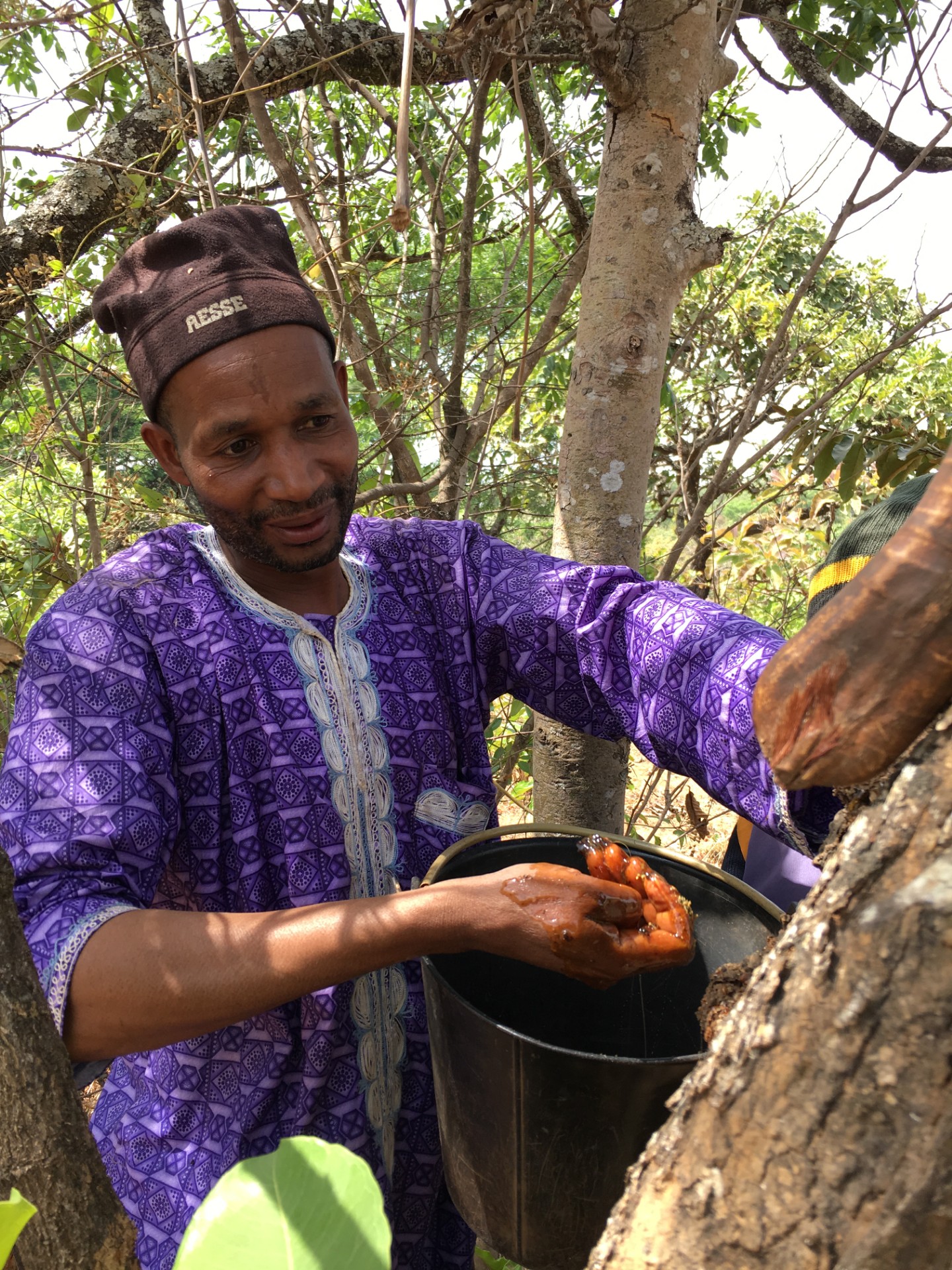
Today, beekeeping is widespread in the Adamaoua Region and constitutes an important source of household income for parts of the rural population. In recent years, honey has transformed from a locally consumed product into a nationally and internationally traded commodity. This development has been driven by traders who brought honey to urban markets. Development organizations that promote the marketing of honey in addition to its production have also played an important role in its commodification. This shift has contributed to a widespread decline in the practice of honey hunting.
The “modern” top-bar hives promoted by development agencies and beekeeping organizations are only of limited suitability in the Adamaoua Region, as they do not adequately reflect local ecological, economic, and social conditions. Most importantly, rural dwellers are usually not able to afford the necessary materials. Beekeeping with traditional grass hives remains a practical and widespread practice, since the required materials are generally freely available and extensive local knowledge can be drawn upon.
At the same time, our research reveals a number of serious challenges that increasingly constrain beekeeping. These include ongoing environmental degradation, the use of pesticides, the theft of honey and hives, and the appropriation of communal land by powerful elites. Beekeeping is also a time-consuming and complex activity that requires lengthy learning processes. Setbacks are part of everyday practice and must repeatedly be overcome. In addition, the materials needed to construct traditional grass hives are becoming scarce in many areas. As a resource-efficient alternative, local beekeepers have therefore developed hives that can be used permanently or repeatedly. These solutions combine elements of modern beekeeping with local knowledge and adapt technical innovations to specific local needs.
Role of ECT
This research would not have been possible without the invaluable support of the Eva Crane Trust. The ECT grant enabled my fieldwork in Cameroon, provided for local research assistants, contributed to the production of ethnographic films, and supported parts of the publication costs.
Dr Martin Gruber, University of Bremen, Germany.
https://sensingbees.de
Ref.: ECTA_20160603
Completed 2025
Publications:
Gruber, Martin
2015. Gbaya: Beekeeping and Honey Hunting. University of Bremen. https://doi.org/10.18450/ethnoa-medien/34.
2018. „Hunters and Guides: Multispecies Encounters Between Humans, Honeyguide Birds and Honeybees“. African Study Monographs 39: 169–87. https://doi.org/10.14989/236670.
2019. Les Ruches Coniques d’Adamoua au Caméroun. in Abeilles: Une Histoire Intime avec l’Humanité. Regert Martine, ed. Pp 90-91.Paris: Cherche Midi.
2024a. „Traditional Beekeeping and Honey Hunting in Central Cameroon. Audiovisual Material, Video Footage“. Bremen: FDZ Qualiservice.
2024b „Traditional Beekeeping and Honey Hunting in Central Cameroon. Ethnographic Film Research“. Bremen: FDZ Qualiservice. https://doi.org/10.26092/elib/3316.
Gruber, Martin & Mazi Sanda,
2015. Beekeeping and Honey Hunting in Ngaoundéré. https://doi.org/10.18450/ethnoa-medien/35.
2017a. Honey Hunting from Earth Nests. Nest. Adamaoua Region of Cameroon. University of Bremen. https://doi.org/10.18450/ethnoa-medien/37.
2017b. Improved Traditional Beekeeping. Adamaoua Region of Cameroon. University of Bremen. https://doi.org/10.18450/ethnoa-medien/38.
2017c. Research on African Honey Bees Apis mellifera adansonii in Cameroon. University of Bremen. https://doi.org/10.18450/ethnoa-medien/39.
2019. Honey Hunting and Beekeeping in Adamaoua (Cameroon). Köln: Rüdiger Köppe.
Cram, Dominic L., Jessica E. M. van der Wal, … Martin Gruber, et al
2022. „The Ecology and Evolution of Human‐Wildlife Cooperation“. People and Nature 4 (4): 841–55. https://doi.org/10.1002/pan3.10369.
Van der Wal, Jessica E. M, Claire N. Spottiswoode, … Martin Gruber, et al
2022. „Safeguarding Human–Wildlife Cooperation“. Conservation Letters, https://doi.org/10.1111/conl.12886.