

1616
General Information
-
Registration number1616
-
Date constructedCirca. 14th Century
-
Century constructed1301-1400
-
Evidence proof dateArchaeological investigation and associated reports
-
Evidence proof useN/A
-
Listed building gradeN/A
-
Condition10
Address
-
AddressHoveringham Medieval Barn
-
Village or townHoveringham
-
CountyNottinghamshire
-
Traditional County (pre 1974)Nottinghamshire
-
RegionEngland
Premises
-
AccessiblePublic?
-
Location on PremisesField/enclosure
-
Direction facedS
Structure Information
-
StructureV: Alcove(s)
-
External recesses1
-
Internal recessesN/A
-
CompartmentsN/A
-
Flight holesN/A
-
Front shapeRectangle?
-
Back shapeFlat
-
Recess size44.5 x 30.3 (113 cm x 77cm)
-
House building shapeN/A
-
External structureBarn wall
-
Distance apartN/A
-
RowsN/A
-
ShelvesN/A
-
Height bases shelves6 (15cm) above internal cobbled floor
-
Wall materialStone
-
Base shelf materialprobably stone
-
Lintel materialWood?
-
Roof materialN/A
Photography Information
-
Date of photograph2025
-
Pictures availableG+: Digital and other types
Notes
-
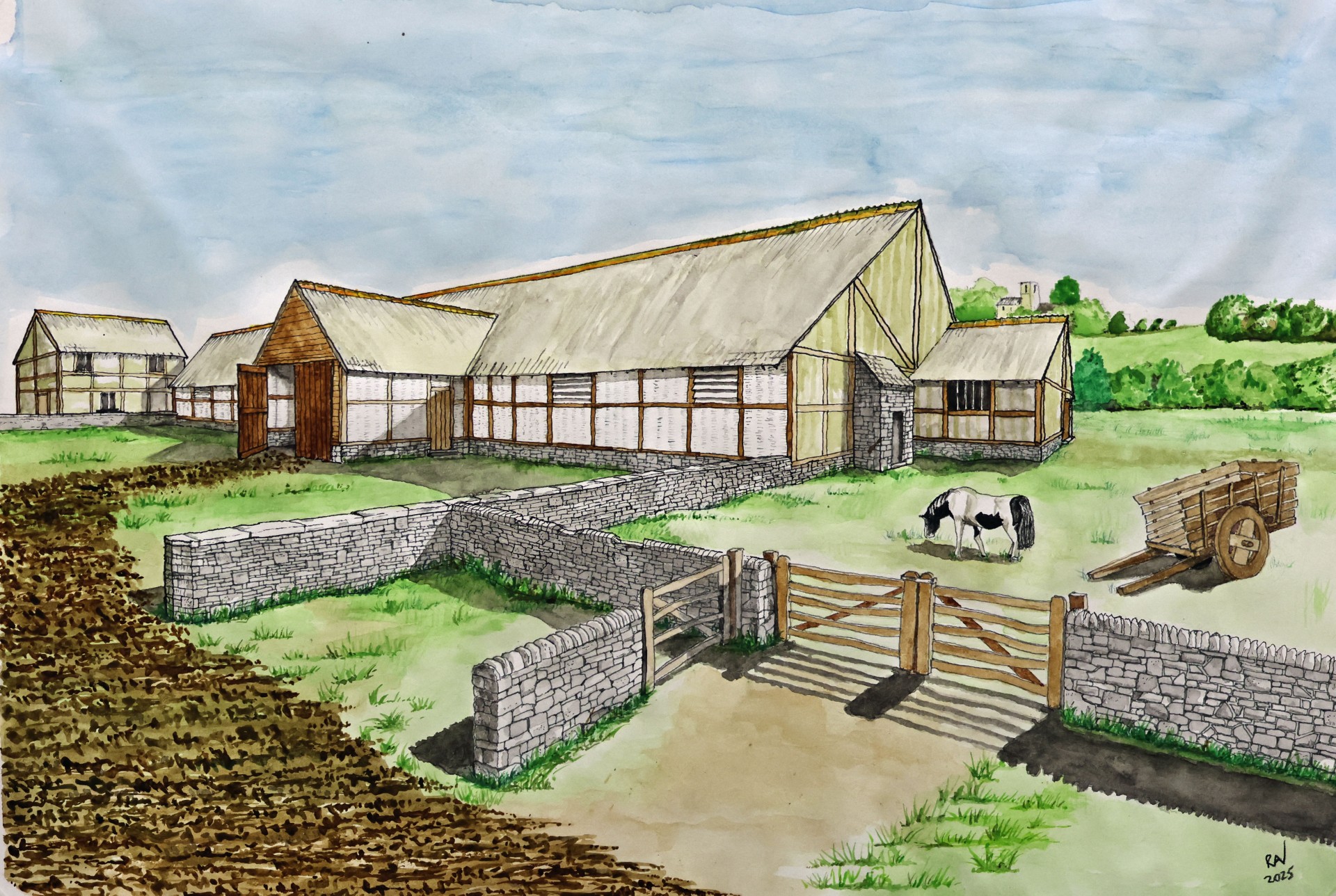
Part of an ongoing archaeological investigation into the manorial home of Sir Robert Goushill, who was killed at the battle of Shrewsbury in 1403.
With thanks to Richard Pincott www.the-field-detectives.com
P. Walker Comments:I think this could have been an external alcove or shelter built against the barn wall (the base abuts the wall and is not keyed in). Such an alcove usually contained one or more shelves – depending on its height – and a roof (as in the artist’s impression); each shelf would have been wide enough for 2 or even 3 skeps.
It is also quite possible that the beekeeper could access the skeps in the alcove from inside the barn, e.g. by opening a door or shutter in the barn wall. In the winter, the outside of the alcove might have been covered to protect the bees in the skeps, and if the bees were still active they could fly in the barn.